
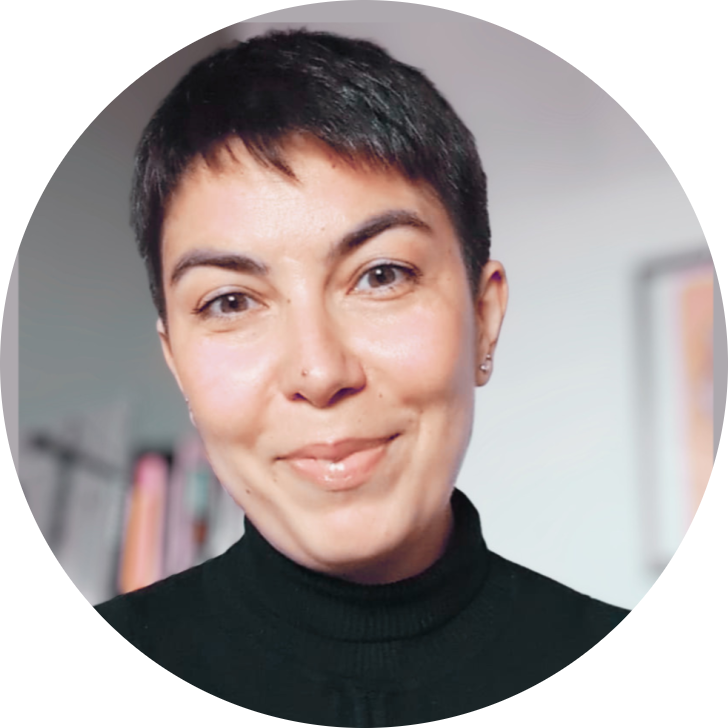
Simona Lippi is Marketing Director at AxelTech, with 12 years in broadcast technology and international sales across Europe, LATAM, and APAC. A Global Executive MBA candidate at SKEMA Business School (Cohort 2024), she specialises in global leadership and intercultural intelligence. Italy representative on the RISE-Women in Broadcast Europe Advisory Board, she is developing her Capstone on storytelling as leadership language to build self-trust for women. She is also a member of the Committee of the SKEMA GEMBA alumni events.
When did you experience the Aha-moment for considering Executive MBA studies?
 I started thinking about the next step for my career earlier than that, as I loved my job; it was hard to just look for a new one. I thought it was the right moment to invest in myself, and I was just moved by the idea of improving my knowledge and gaining a new title. Then I realised that the will to go for a new title was hiding the idea of “I want people to take me seriously,” and it was important to realise it because then it became interesting to witness the transformation of that thought, throughout my journey in the GEMBA.
What helped you discover SKEMA as your next Alma Mater?
I found the SKEMA programme by chance, but since the first time I visited SKEMA’s website and read the payoff “At home, worldwide,” I knew this was it. I didn’t want to follow my first impression alone, so I took a deep dive into many programmes’ brochures, descriptions, and interviews.
In comparison with other programmes, SKEMA matched my need for an international programme compatible with my life and career. The residential weeks in China, Brazil, and the US focused on intercultural intelligence and leadership. The emphasis on ESG, talent development, and intercultural competence aligned perfectly with my values. Plus, the cohort’s diversity stood out.
In the end, what confirmed my instinct was right was the programme structure and the interviews with a student and the programme director, Anke Middelmann. At that point, I was sure the cultural fit was 100%.
What are some of the values you share with your peers in the programme?
In my experience, the link established within my cohort has been the main surprise and also the main plus coming from the programme.
We share a commitment to turning individual journeys into collective uplift, the courage to face personal blind spots, the attention and care for our own and others’ growth, and trust in the process, even when it’s uncomfortable. I believe that this environment enhanced our capacity to unlock our potential, elevating it to a completely new level, making it possible, first and foremost, to work on our humanity and to show up beyond any performative dimension.
What was the focus of your application letter, and is it still relevant at the end of your studies?
I went back to my application letter many times, and every time I discovered that the subjects I mentioned back then, although still in need of deeper exploration, are ultimately the ones that became my main interest and focus throughout the journey, growing with me into a new form.
One of the main subjects was trust: as my core value and pain point, and as a universal challenge in leadership worldwide. This subject is clearly more relevant now than ever in the global context, but it has also become relevant in a new and more personal way. My Capstone project will, in fact, be shaped around this very subject, moving from my own pain points and exploring trust, confidence, and self-doubt as a foundation for a new approach to leadership.
What aspects of the GEMBA experience exceeded your expectations and what is it you wish you knew or did differently as you are approaching graduation?
The depth of personal transformation and the role of the cohort’s intimacy exceeded everything. Thanks to the way the programme is conceived, everything developed very naturally: each assignment, each residential week, each conversation built on the previous one, and my self-awareness grew slowly and steadily.
Honestly, I have very few regrets, because I feel I was able to grow at exactly the right pace for me. If there is one thing I would do differently, it would be to manage some of the bigger assignments more evenly over time rather than in concentrated bursts, but it’s really a minor footnote.
What does it take to combine an active career with a 20-month global EMBA programme that takes you around the world?
For me, the key has been a constant focus on my deep, personal motivation. Reminding myself, in moments of fatigue and frustration, that I was doing this only for myself, not for an external goal, no money, no status, opened the door to ruthless prioritisation. Each subject demands real depth, so you have to prioritise and stay focused without losing any opportunity to learn. Then, of course, a supportive network: within the cohort, and outside it, in my personal life. I treated GEMBA as non-negotiable “me time,” and I found it personally helpful to build a new set of routines to avoid constant struggles with time management… except for some assignments, as I mentioned above!
The modular format also helped enormously. The flexibility makes the programme adjustable to many different circumstances: I travel extensively for work, and yet I was able to keep up with classes and assignments throughout.
Have you been able to bring value to your employer and other organisations yet with the knowledge and skills you have gained at SKEMA so far?
As I progressed through the programme, I noticed I was bringing a different quality of contribution and, more importantly, I began approaching daily tasks with a new and very different intention. The frameworks from SKEMA gave me a language for things I had been doing intuitively, and that clarity changed how I show up professionally.
From the perspective of finding a new balance within my current company, I won’t hide that there are also moments of frustration, in particular, recognising the mistakes we are still making as an organisation and the current limits of my ability to act on them. I think these frictions are inevitable, and navigating them is part of the growth.
How have you grown personally and professionally during the programme and has this been noticed on the workplace and other commitments you have?
Personally, I feel I have started to move from performative confidence to grounded self-trust. It’s, of course, a very personal shift, but it changes everything from the inside, how I prepare, how I speak, how I decide to stay silent or to take up space.
Professionally, beyond the enormous new academic knowledge, I gained a new method of approaching things: more intentional, more interculturally aware, and more comfortable with complexity. And none of that can go unnoticed! I would describe the overall effect as a quiet authority shift, the kind that you can sense before you can name it.
How do you measure the ROI of your GEMBA studies in and beyond financial terms?
Financially, I cannot measure it yet, but I am confident in a pivot toward roles with higher potential, both in income and in impact, and I expect to repay the investment soon enough. I don’t want to understate this dimension: I believe it is crucial, and particularly so for women, who tend to approach self-focused investments with much more fear and hesitation.
But clearly, following everything I have described so far, the main ROI reaches far beyond the financial side. From the relationship with my cohort, to the academic knowledge gained, to the work on the foundation of a renewed personal confidence, I believe the true return will be a life, and therefore a career, that finally feels like mine.
What is the value of MBA studies for aspiring women leaders?
To me, it feels like I’m finally free to claim space in my own way, without having to follow someone else’s model or path. It also gave me practical tools to name and dismantle internal barriers like self-doubt, which may be coded as “feminine” but are in fact structurally reinforced by the environments we navigate.
As I described throughout these answers, the experience has been a slow, inexorable shift towards a personal leadership model, shaped not by someone else’s template, but by my own findings, values, and story. I believe that this distinction matters enormously, especially for women.
How does DE&I from business school translate into the workplace? What has your impact been?
The GEMBA gave me a new and deeper awareness of DEI, and it all started with a reflection on sustainability and its meaning, both in organisations and in life. What struck me most was the invitation to start with ourselves: with our own balance, our own blind spots, and our own impact at a local level before thinking about systemic change.
I came away with a more pragmatic and long-term approach to these issues. Rather than treating DEI as a set of policies or compliance targets, I now see it as a daily practice in how I lead conversations, how I create space for others, and how I advocate within the organisations I am part of. The shift doesn’t have to be dramatic or immediately visible, but it has to be consistent, and I believe that consistency is where lasting impact actually lives.


